Nowadays, a new type of news is getting frequent attention – Rich Beggars. Like many of you, I had never thought of using those two words together since they are completely opposite, unless it was in a school grammar test on antonyms. While it sounds ironic, the news of beggars living a dual life is pretty evident nowadays. A few days ago, I heard of a bride who ran away from her in-laws’ home the very next day after getting married. She was married into a rich family, and obviously, it was an arranged marriage. But she found out in the basement that her in-laws and husband were wearing torn, rugged clothes and that their sole profession was begging. You can find similar stories on the internet. Listening to these stories makes me feel that begging is not always their fate but rather their choice. It is not a multinational corporation business or something taxable (which obviously works in their favor), but it becomes the easiest career option for many—low investment with high profitability.
But even then, I always felt that it might not be the case for everyone. Judging a specific sample and generalizing the result to the larger population still seems unethical and illogical to me.
A few days ago, one afternoon near Kalighat Metro station, I was sitting in front of Lake Mall. A middle-aged woman in an old salwar kameez, with her head covered by a dupatta, was carrying a child in her arms. The child was maybe a year or two old. I guessed it was a girl. The little girl had a milk bottle in her hand, sucking from the nipple end. It seemed as if the woman was trying to beg money while using the child as a tool of sympathy. I refused to offer any kind of consolation or money. She asked us once again. But this time, her words were different. Rather than asking for money, she asked for a packet of Horlicks.
Horlicks, a company that claims to be a nutritional supplement usually taken with milk and often consumed by children. I generally don’t refuse anyone if they ask for food. So when she asked me to buy Horlicks from the store nearby, I didn’t refuse her and agreed. We both went together. She looked excited and happy. She picked one, but I told her I couldn’t afford the big packet, so I bought her the smaller one. She was happy and started giving us all kinds of blessings. My friend asked the name of the girl. She said her name was Paro. And then she left.
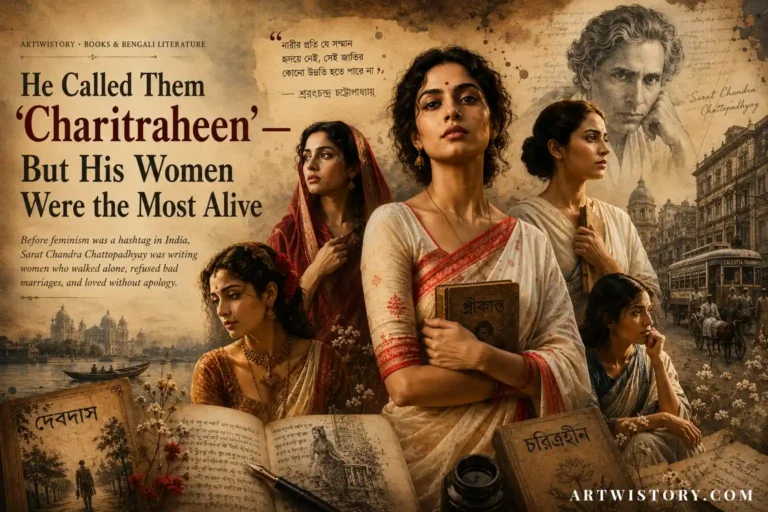
Paro? Isn’t Paro an unusual name for a beggar? A name I had only heard while watching or reading Devdas. Did she name her daughter after Devdas? When did she watch it? Or had she read it somewhere?
Eventually, these thoughts made me uncomfortable. I realized I was so ill-minded to think that a poor woman who begs cannot name her daughter Paro. Maybe it doesn’t matter whether the woman named her daughter after Devdas or not. What matters is that even in the most fragile corners of life, people don’t name their children out of pity. They name them out of hope, memory, and dignity.
To generalize beggars as cheats or victims is to deny them individuality. That afternoon, Paro wasn’t just a prop in her mother’s arms. She was something more than someone’s dream. Paro—once a name that belonged to grand tragedies on screen—now lay cradled in a beggar’s arms, waiting for milk.